Decoding Mercury's Orbit: The Sun's Closest and Fastest Companion
In the cosmic ballet of our Solar System, no planet performs quite like Mercury's orbit around the Sun. This small, desolate world holds the unique distinction of being both the closest and fastest planet, a true marvel of celestial mechanics. Its proximity to our star, combined with its unique rotational and orbital characteristics, creates an environment of extreme contrasts and relentless motion. Understanding Mercury's journey isn't just about tracing a path in space; it's about unraveling the fundamental laws that govern planetary dynamics and appreciating the incredible diversity within our own cosmic neighborhood.
Mercury's dance around the Sun is a testament to the powerful gravitational forces at play, shaping not only its trajectory but also its very geology and atmospheric conditions. From its lightning-fast orbital speed to its highly elliptical path, every aspect of its celestial movement contributes to the enigmatic nature of this innermost planet. Join us as we delve into the mechanics and profound implications of Mercury's extraordinary orbit.
The Unrivaled Speed and Proximity of Mercury's Journey
Mercury's defining characteristic is its intimate relationship with the Sun. Orbiting at an average distance of just 58 million kilometers (36 million miles), or approximately 0.4 astronomical units (AU), it is firmly nestled within the Sun's fierce embrace. This close proximity is the primary driver behind its astonishing speed, making it the Usain Bolt of the Solar System.
Planetary orbital speed is a direct function of the masses of the two interacting bodies and the distance separating them. The Sun's colossal mass exerts an immense gravitational pull on Mercury, forcing the tiny planet to accelerate to an incredible pace to avoid falling into our star. Mercury whizzes around the Sun at a staggering average orbital speed of 47.87 kilometers per second (107,082 mph). To put this into perspective, distant Neptune ambles along at a mere 5.43 km/s. This allows Mercury to complete a full revolution around the Sun in just 88 Earth days, making its year shorter than any other planet's.
This relentless pace means that for every two full orbits Mercury completes, the Earth has barely completed a quarter of its own journey. The sheer velocity required for such a tight orbit under the Sun's gravitational dominance is a powerful illustration of Newton's laws of motion and gravity in action.
A Dance of Extremes: Mercury's Elliptical Path
While all planets in our Solar System trace elliptical paths rather than perfect circles, Mercury takes this eccentricity to an extreme. It boasts the most elliptical orbit of any planet, with an orbital eccentricity of 0.2056. This means there's a significant difference between its closest point to the Sun (perihelion) and its farthest point (aphelion).
- At perihelion, Mercury is a mere 46 million kilometers (29 million miles) from the Sun.
- At aphelion, it stretches out to 70 million kilometers (43 million miles) from the Sun.
This pronounced variation in distance has profound implications for the planet. The intensity of solar radiation hitting Mercury's surface fluctuates dramatically throughout its year, contributing to the incredible temperature swings experienced on its surface. While Mercury's orbital period is a speedy 88 Earth days, its rotational period is a comparatively slow 59 Earth days. This unique resonance, where it rotates three times for every two orbits, leads to a solar day lasting 176 Earth days – meaning the Sun bakes one side of the planet for months at a time before the next sunrise.
A Desolate World Forged by Its Orbital Dance
The orbital characteristics of Mercury are not just fascinating statistics; they are the primary architects of its harsh, desolate environment. Mercury: Unveiling the Solar System's Smallest & Fastest Planet reveals a world shaped by extreme forces, and its orbit is the key.
The extreme proximity to the Sun means Mercury is constantly bombarded by intense solar radiation and solar winds. With virtually no atmosphere—only a tenuous exosphere—there's nothing to shield its surface from this onslaught or to trap heat. This lack of atmospheric protection leads to the most drastic temperature variations in the Solar System, plummeting from scorching highs of over 430°C (800°F) during the day to freezing lows of -180°C (-290°F) at night.
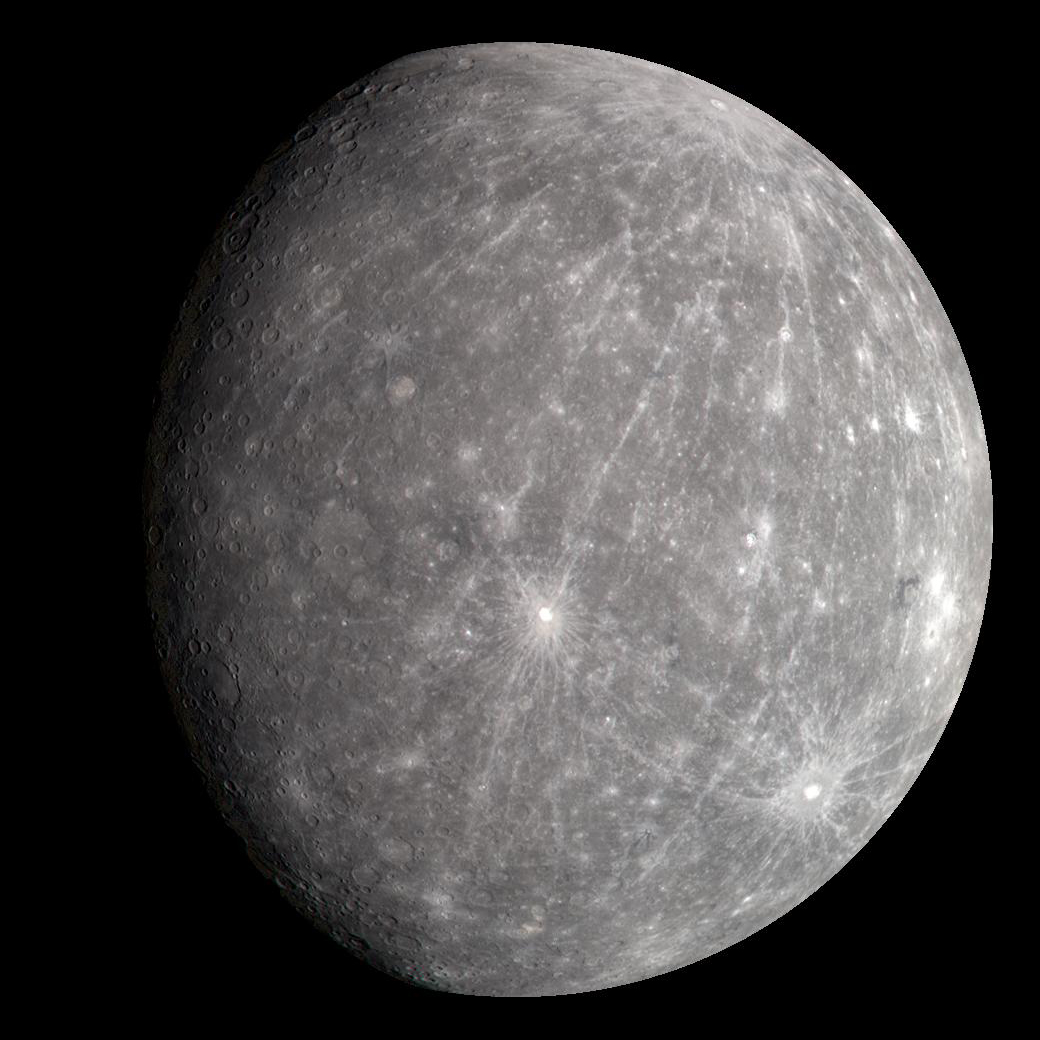
This lack of atmosphere also leaves Mercury's surface exposed to constant bombardment by micrometeoroids and asteroids. Coupled with the absence of active volcanism or tectonic activity to resurface the planet, Mercury is heavily scarred by impact craters, a testament to its ancient, unblemished history stretching back some 4.5 billion years. It's a "dead world" in the most literal sense, preserved almost exactly as it was in the early days of the Solar System.
Beyond the Surface: Mercury's Dense Secret
Despite being the smallest planet in our Solar System – with a radius of just 2,440 km (1,516 mi), making it only slightly larger than Earth's Moon and even smaller than moons Ganymede and Titan – Mercury holds a surprising secret beneath its desolate crust. While it is the lightest planet, with a mass of 3.3011×10²³ kg (0.055 Earth's mass), it is also the second densest planet, surpassed only by Earth itself.
This paradox is explained by its remarkably massive iron core. While most planets have a modest core, Mercury's is thought to be enormous, spanning an astonishing 85% of its radius. This makes Mercury's core disproportionately large compared to its overall size, accounting for a significant portion of its mass and density. Scientists believe this large metallic core might be a remnant of a catastrophic impact early in Mercury's history, stripping away much of its lighter silicate mantle. To explore this fascinating anomaly further, delve into Beyond the Surface: Mercury's Enormous Iron Core and Density Secrets.
The precise reasons for such a gigantic core are still a subject of scientific debate, but its presence is crucial to understanding Mercury's internal structure, its formation, and even its weak magnetic field. It's a hidden powerhouse that contributes significantly to the planet's unique characteristics, making it far more complex than its small size might suggest.
Observing Mercury's Celestial Transit
Given Mercury's close proximity to the Sun, observing it from Earth can be challenging. It's often only visible shortly after sunset or before sunrise, low on the horizon. However, one of the most spectacular ways to witness Mercury's orbit in action is during a transit, when the planet passes directly between the Earth and the Sun, appearing as a tiny black dot silhouetted against our star.
Advanced space missions, such as the European Space Agency's (ESA) Solar Orbiter, launched in 2020 to study the Sun, have provided stunning front-row seats to these celestial events. Recent imagery has captured Mercury moving across the Sun's fiery disk, offering a dramatic visual representation of the vast size difference between the two bodies. Scientists estimate that more than 21 million versions of tiny Mercury could fit inside the Sun. Such observations not only highlight the incredible scale of our Solar System but also provide invaluable data for studying the Sun's atmosphere and the dynamics of planetary orbits.
Conclusion
Mercury's orbit around the Sun is a masterclass in planetary dynamics, a dizzying display of speed, proximity, and eccentricity. It is a world where extremes are the norm, carved by the relentless gravitational pull of our star. The fastest planet, with the shortest year, Mercury's unique orbital and rotational resonance creates a surface environment unlike any other, characterized by immense temperature swings and an ancient, cratered landscape.
From its massive iron core that belies its small size to its spectacular transits across the Sun's face, Mercury continues to fascinate and challenge our understanding of planetary evolution. It serves as a stark reminder of the incredible diversity and awe-inspiring forces at play in our Solar System, proving that even the smallest worlds can hold the biggest secrets and perform the most remarkable celestial dances.